Complete Guide for First-Time Homebuyers
Real Estate, First-time Homebuyer, Home Buying Process
The Complete Home Buying Guide for First-Time Homebuyers
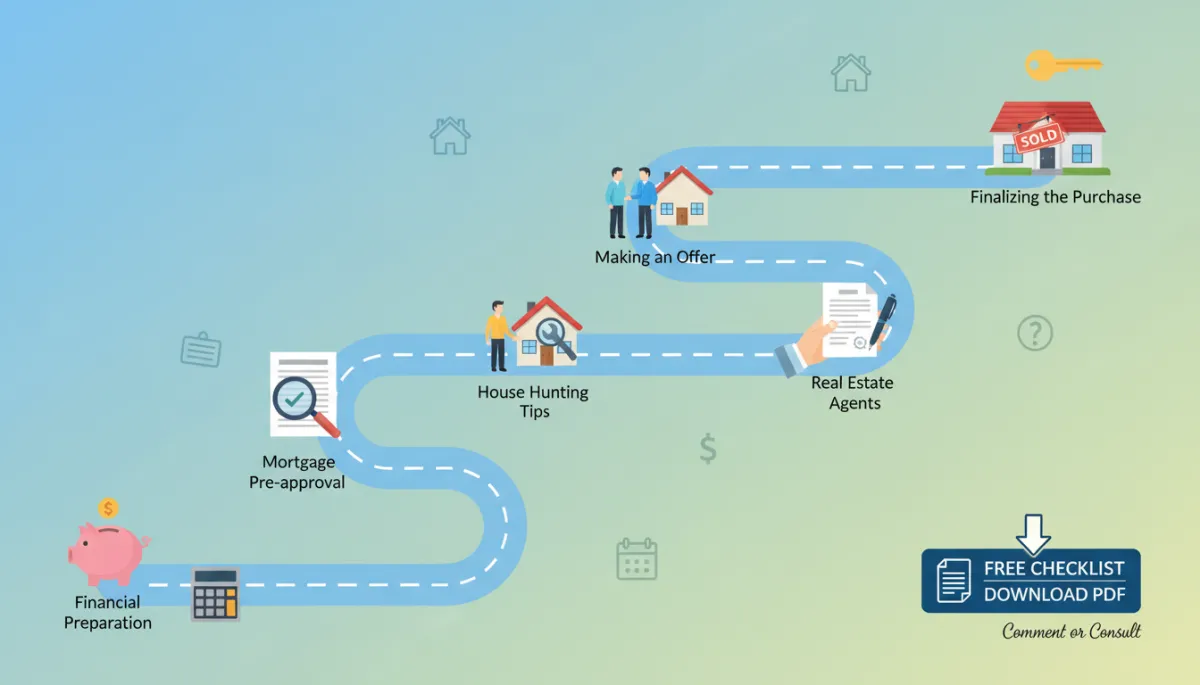
Buying your first home is exciting, but it can also feel overwhelming. This comprehensive guide walks you step-by-step through the entire home buying process—from checking your finances and getting Mortgage Pre-approval to House Hunting Tips, working with Real Estate Agents, making an offer, inspections, and finalizing the purchase—so you can move forward with confidence.
Step 1: Assessing Your Financial Health Before You Start Looking
The Home Buying Process should always begin with a clear, honest look at your finances. As a First-time Homebuyer, it is tempting to jump straight into browsing listings, but understanding what you can truly afford will save you time, stress, and disappointment later on.
Understand your income, expenses, and debts
Start by listing all sources of monthly income, including your salary, side gigs, bonuses, or other regular earnings. Then, track your monthly expenses—rent, utilities, subscriptions, groceries, transportation, insurance, and minimum debt payments. This will give you a realistic picture of your cash flow and how much room you have for a mortgage payment, property taxes, and home maintenance.
Check and strengthen your credit profile
Your credit score plays a major role in the interest rate you receive and the type of loan you qualify for. Request a copy of your credit report from the major bureaus and review it for errors, high balances, or late payments. Paying down credit card balances, avoiding new debt, and making all payments on time for several months can significantly improve your score and lower your long-term borrowing costs.
Build your savings: down payment, closing costs, and reserves
Beyond the purchase price, buying a home comes with several upfront costs. As a First-time Homebuyer, plan for:
Down payment: Often 3%–20% of the purchase price, depending on the loan program and your financial profile.
Closing costs: Typically 2%–5% of the purchase price for fees such as appraisal, title insurance, and lender charges.
Emergency reserves: Ideally three to six months of living expenses set aside for unexpected events or repairs.
💡 Pro Tip: Some local and national programs offer down payment assistance or grants for First-time Homebuyers. Ask your lender or Real Estate Agent about options in your area.
Step 2: Mortgage Pre-Approval – Your Home Buying Green Light
Mortgage Pre-approval is one of the most important early steps in the Home Buying Process. It tells you how much a lender is willing to finance and shows sellers that you are a serious, qualified buyer. Pre-approval is stronger than simple pre-qualification because the lender actually reviews your documents and credit.
What lenders look at during pre-approval
When you apply for Mortgage Pre-approval, the lender typically reviews your:
Income and employment history (pay stubs, W-2s, tax returns, or business records if self-employed)
Credit report and credit score
Existing debts and minimum payments (to calculate your debt-to-income ratio)
Assets and savings (bank statements, investment accounts, gift letters if family is helping)
The lender will then issue a pre-approval letter stating the maximum loan amount, estimated interest rate, and type of loan you qualify for. Remember, just because you are approved for a certain amount does not mean you must spend it. Choose a price range that keeps your monthly payment comfortable for your lifestyle and goals.
Why pre-approval matters in a competitive market
In many areas, homes can receive multiple offers within days of being listed. Sellers and their Real Estate Agents often prioritize offers from buyers who already have Mortgage Pre-approval because it reduces the risk of financing falling through. Having your letter ready can make your offer stronger and speed up the negotiation process.
💡 Pro Tip: Shop around with multiple lenders—banks, credit unions, and mortgage brokers—to compare rates, fees, and loan products before choosing the one that fits you best.
Step 3: House Hunting Tips – Finding the Right Home for You
Once your finances are in order and you have Mortgage Pre-approval, the fun part begins: searching for your new home. Effective House Hunting Tips can help you stay focused, avoid emotional decisions, and identify properties that truly fit your needs and budget as a First-time Homebuyer.
Define your must-haves, nice-to-haves, and deal-breakers
Before you start touring homes, create a written list with three columns:
Must-haves: Non-negotiable features such as number of bedrooms, commute time, school district, or accessibility needs.
Nice-to-haves: Features you would love but can live without, like a finished basement, large yard, or updated kitchen.
Deal-breakers: Things you absolutely want to avoid, such as being on a busy road, lack of parking, or major structural issues.
This list keeps you grounded when emotions run high and helps you quickly compare different homes after a long day of showings.
Research neighborhoods and long-term lifestyle fit
A home is more than walls and finishes—the neighborhood matters just as much. Visit potential areas at different times of day to assess traffic, noise, and safety. Check commute times, access to public transportation, parks, restaurants, and essential services. If you plan to stay for several years, think about how your needs might change and whether the area can grow with you.

-toned photo of a real estate agent showing a printed home listing and floor plan to a couple...
Touring multiple homes with a clear checklist helps first-time buyers compare options objectively.
Stay organized as you view homes
Homes can start to blur together, especially if you view several in a single day. Take photos or short notes on your phone for each property, including pros, cons, and your gut reaction. Rate each home on your must-have list and note any potential concerns to discuss with your Real Estate Agent later.
Step 4: Working with Real Estate Agents – Your Trusted Guide
A knowledgeable Real Estate Agent can make the Home Buying Process smoother, less stressful, and often more financially favorable. For a First-time Homebuyer, having an experienced professional to explain terms, spot red flags, and negotiate on your behalf is invaluable.
How to choose the right agent for you
When interviewing Real Estate Agents, ask about their experience with First-time Homebuyers, knowledge of your preferred neighborhoods, and communication style. Look for someone who:
Listens carefully to your goals and concerns
Explains the process clearly, without jargon or pressure
Responds promptly to calls, texts, or emails
Has positive reviews or referrals from past clients
Remember, as a buyer, you typically do not pay your agent directly—their commission is usually paid by the seller out of the sale proceeds. So take advantage of their expertise and ask questions freely.
What your agent does for you
A buyer’s agent will help you:
Clarify your wish list and budget
Identify suitable properties and schedule showings
Analyze comparable sales to estimate fair market value
Draft and submit offers, counteroffers, and contingencies
Coordinate inspections, appraisals, and communication with your lender and the seller’s agent
💡 Pro Tip: A strong Real Estate Agent is your advocate. If you ever feel rushed, confused, or uncomfortable, speak up or consider switching agents.
Step 5: Making an Offer – Turning “I Love It” into a Contract
When you find a home that feels right, it is time to make an offer. This stage of the Home Buying Process combines strategy, market knowledge, and negotiation skills. Your Real Estate Agent will be crucial in guiding you through it, especially as a First-time Homebuyer.
Determining your offer price and terms
Your agent will review recent comparable sales (“comps”)—similar homes that sold nearby—to help you decide on a competitive yet reasonable offer price. Beyond price, your offer includes:
Earnest money deposit: A good-faith deposit showing you are serious, typically held in escrow and applied to your down payment at closing.
Contingencies: Conditions that must be met for the sale to proceed, such as financing, appraisal, and inspection contingencies.
Closing date: When you propose to finalize the purchase and take possession.
Negotiation and counteroffers
The seller may accept your offer as-is, reject it, or respond with a counteroffer that changes the price, closing date, or other terms. This back-and-forth is normal. Stay focused on your budget, priorities, and the big picture. Do not be afraid to walk away if the numbers or conditions no longer make sense for you.
💡 Pro Tip: In a hot market, your Real Estate Agent might suggest strategies like offering flexible closing dates or a larger earnest money deposit to strengthen your offer without overextending your budget.
Step 6: Inspections – Protecting Yourself from Hidden Problems
Once your offer is accepted and you are under contract, the next crucial step is inspections. Even if the home looks perfect on the surface, a professional inspection can uncover issues that may affect your safety, comfort, or long-term costs. For a First-time Homebuyer, this is one of the most educational parts of the Home Buying Process.
The standard home inspection
A licensed home inspector evaluates the property’s major systems and structure, including:
Roof, attic, and insulation
Foundation, basement, and visible structural components
Electrical, plumbing, and HVAC systems
Windows, doors, walls, and ceilings for signs of leaks or damage
You will receive a written report detailing any concerns, from minor maintenance issues to major defects. Do not panic if the list seems long—most homes have at least some items that need attention. Focus on safety issues, structural problems, and very expensive repairs.
Additional specialized inspections
Depending on the home’s age, location, and condition, your Real Estate Agent may recommend additional inspections, such as:
Termite or pest inspection
Sewer line or septic system evaluation
Radon, mold, or lead paint testing
Using inspection results to renegotiate or plan repairs
If inspections reveal significant issues, you typically have several options, depending on your contract and local customs. You might:
Request that the seller make repairs before closing
Ask for a credit or price reduction to cover repair costs
Accept the home as-is but plan for future repairs in your budget
In extreme cases, exercise your inspection contingency to cancel the contract and recover your earnest money
💡 Pro Tip: Attend the inspection if possible. Walking through the home with the inspector is a great opportunity to learn how your new home works and how to maintain it.
Step 7: Finalizing the Purchase – From “Under Contract” to “Homeowner”
After inspections are complete and any negotiations are settled, you move into the final phase of the Home Buying Process: preparing for closing. This is where all the behind-the-scenes work comes together to officially transfer ownership from seller to buyer.
Appraisal, underwriting, and final loan approval
Your lender will order an appraisal to confirm that the home’s value supports the loan amount. At the same time, the underwriting team reviews your financial documents again to ensure nothing has changed significantly since Mortgage Pre-approval. During this period, avoid making large purchases, changing jobs, or opening new credit accounts, as these can affect your approval.
Reviewing your closing disclosure and final numbers
A few days before closing, you will receive a Closing Disclosure outlining your final loan terms, interest rate, monthly payment, and all closing costs. Review this document carefully and compare it to your initial loan estimate. Ask your lender to explain any fees you do not understand. This is your chance to catch errors before you sign.
Final walk-through and closing day
Typically within 24 hours of closing, you and your Real Estate Agent will complete a final walk-through of the property. This is your opportunity to confirm that agreed-upon repairs were completed and that the home is in the expected condition. On closing day, you will meet at a title company, attorney’s office, or similar location to sign the loan documents and transfer paperwork. You will also pay your down payment and closing costs, usually via certified funds or wire transfer.
Once everything is signed and funds are disbursed, the deed is recorded in your name—and you officially become a homeowner. Your Real Estate Agent will hand you the keys, and you can step into your new home with confidence, knowing you navigated each stage of the Home Buying Process thoughtfully.
Your Next Step: Download the Free First-Time Homebuyer’s Checklist
Buying a home involves many moving parts, and it is easy to lose track of details along the way. To make your journey smoother, we have created a free, step-by-step “First-Time Homebuyer’s Checklist” PDF that you can print or save to your phone. It summarizes each stage—from assessing your financial health and securing Mortgage Pre-approval to House Hunting Tips, working with Real Estate Agents, making an offer, scheduling inspections, and finalizing the purchase—so you always know what comes next.
Download your free checklist now to stay organized, ask the right questions, and feel more in control of your home buying experience.
Let’s Continue the Conversation
Every First-time Homebuyer’s situation is unique. Your income, debts, family plans, and local market all shape the best strategy for you. If you still have questions about the Home Buying Process, Mortgage Pre-approval, House Hunting Tips, or how to work effectively with Real Estate Agents, I would love to hear from you.
Share your questions or experiences in the comments—your story could help another buyer who is just getting started. If you would like more personalized guidance, consider scheduling a consultation to walk through your goals, finances, and timeline in detail. With the right information and support, you can move from “someday” to “welcome home” sooner than you think.
